This story was a school project focusing on multimedia work. As the goal was multimedia, I wanted the story to have a visual focus and decided to write about the art students see on campus every day. During the process of creating this story, I conducted interviews, wrote, photographed, recorded video, edited video, and created data visualizations.
Exploring Voices Through Art
How the art at the University of Washington reflects it's diverse student body. 
Six side profile silhouettes alternating in color from purple to gold within a black frame on weathered paper. Collage created by Faith Ellis. Illustrations and assets courtesy of Nadya, GDJ, Natalia Kurt, Mete-X, OpenClipart-Vectors, and Panadesign for Canva
Murals line campus walkways. Statues sit in courtyards. Gallery walls rotate with new exhibitions each quarter. Art is not confined to a single building at the University of Washington (UW); it is woven into students' daily routines as they move between classes, study sessions, and social spaces. But beneath the colors, materials, and installations is a larger question: whose voices are being amplified by the art on campus, and whose stories go unseen?
Campus art is more than mere decoration. It becomes a daily reminder of which communities are visible and which are still searching for space on the walls, in the galleries, and across shared public spaces. And as the university grows and evolves, so too do the opportunities to redefine how art reflects the people who learn, work, and live here.
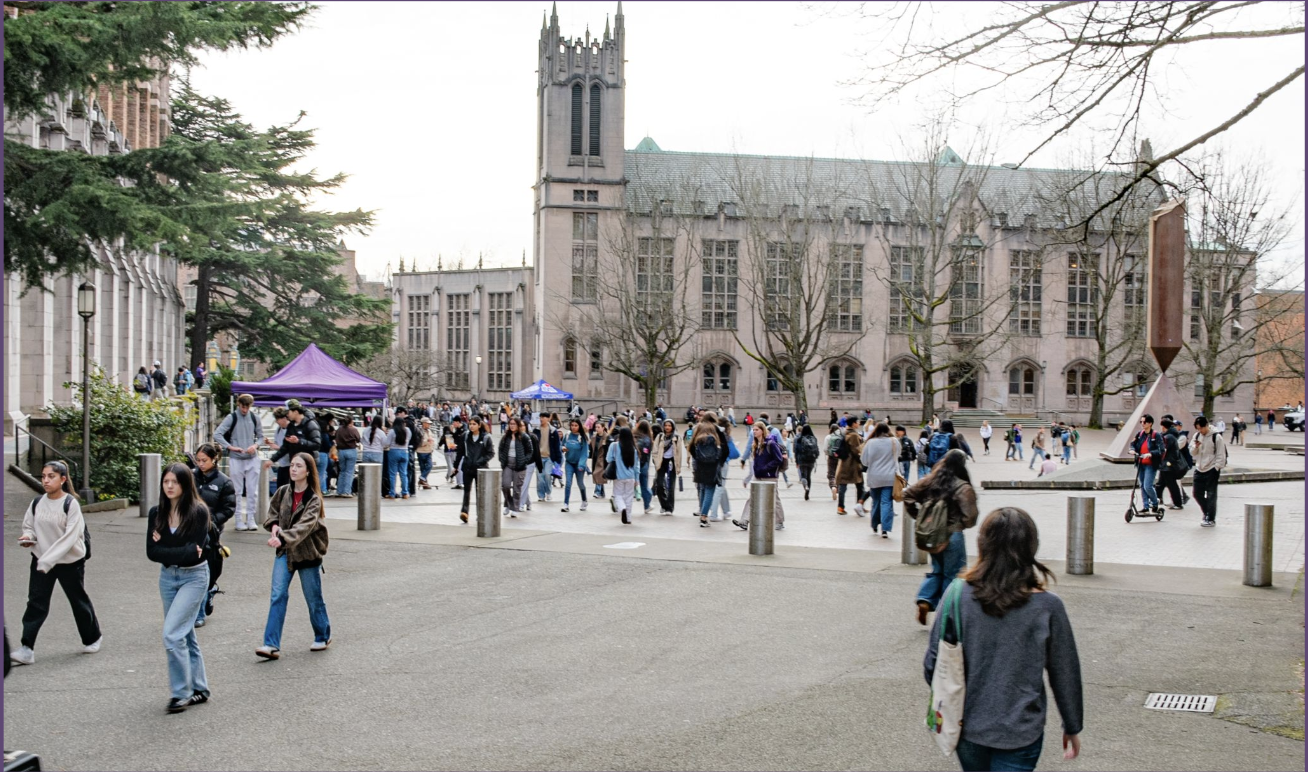
Photo: UW SmugMug. Students walking through Red Square on Wednesday, February 26, 2025. Passing by one of the University of Washington's most iconic art installations, the Broken Obelisk.
Over time, the racial makeup of the UW student body has greatly shifted
In 1987, an article by UW News stated that 18% of the student body were minorities and 48.3% were female. While the university has always had a strong female student population, the greatest growth is seen among minority students.
From 2012 to 2023, the share of minority students rose from 48.52% to 63.1%, making them the majority of the UW undergraduate population.
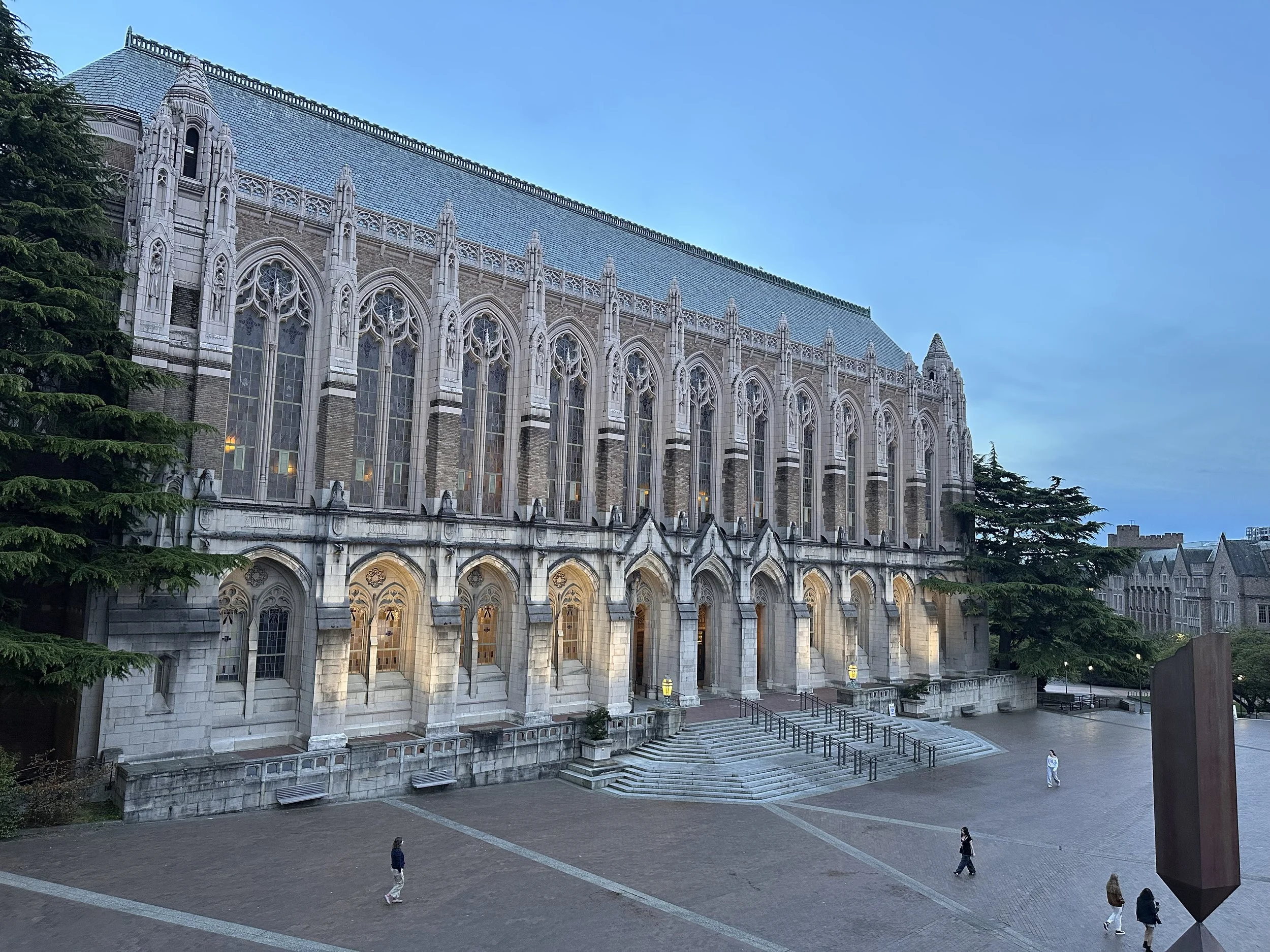
While many of the permanent art installations on campus that are often what first come to students' minds when they think of art on campus focus on ideas or concepts from white scholars and artists, such as the George Washington statue or the figures within the exterior walls of Suzzallo Library, the galleries are where diversity really shines.
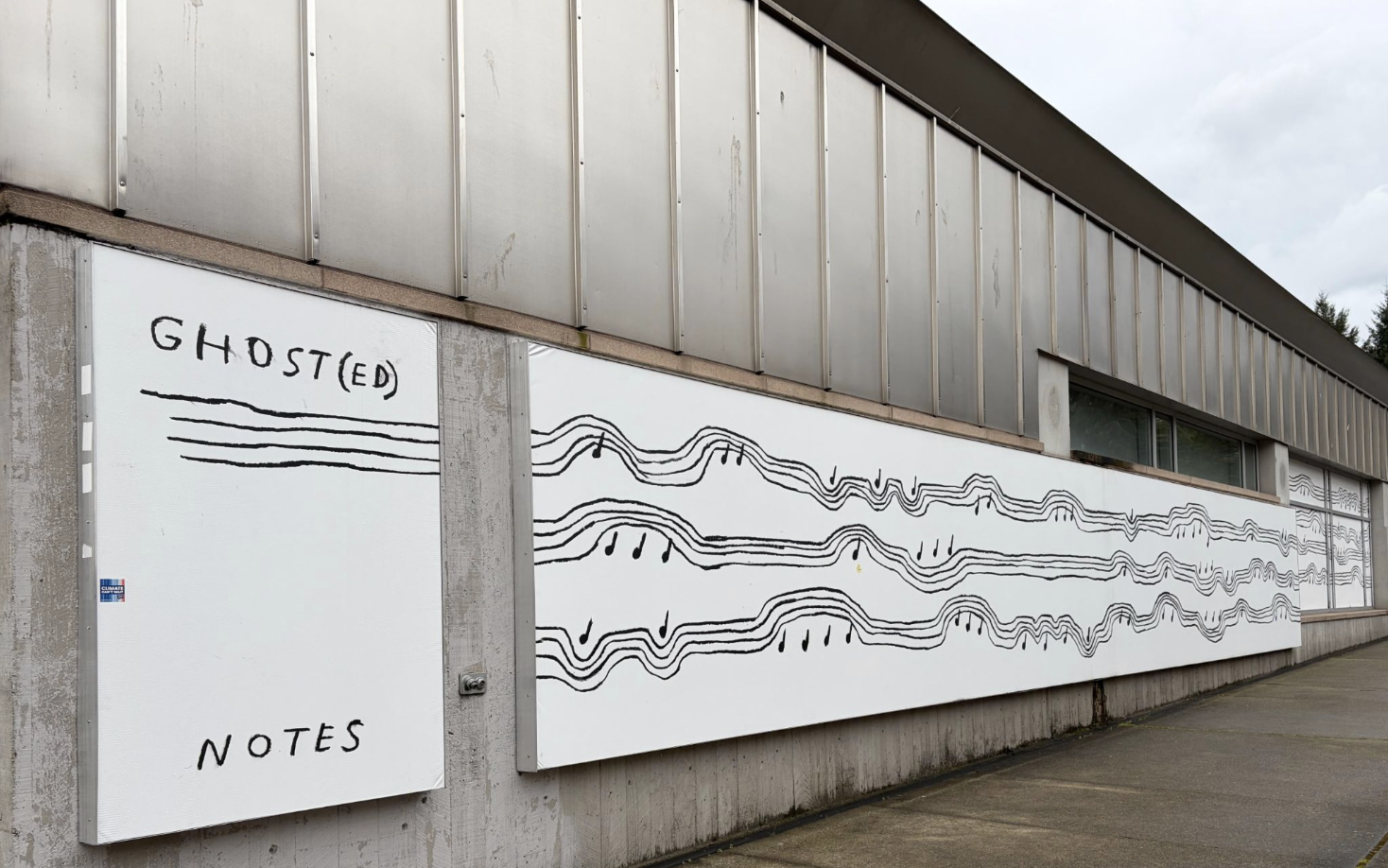
Photo: Faith Ellis. The Ghost(ed) Notes mural by Christine Sun Kim on the side of the Henry Art Gallery on March 15, 2026. The mural reflects on accessibility through communication.
"There are some art pieces in Suzzallo that are beautiful and full of meaning, but the ones I see the most are the music ghost note mural on the side of the Henry and the giant love sign on top of the Henry." - Kamila Nagle
The Henry Art Gallery was the first public art museum in Washington state and remains a central institution within the university's art community.
Established in 1927, the museum's origins trace to a significant donation of traditional European and American paintings by Seattle philanthropist Horace C. Henry.
In its early years, the Henry, like many museums of the period, focused its exhibitions on Western artists and perspectives, reflecting the prevailing cultural values and artistic priorities of the early twentieth century.
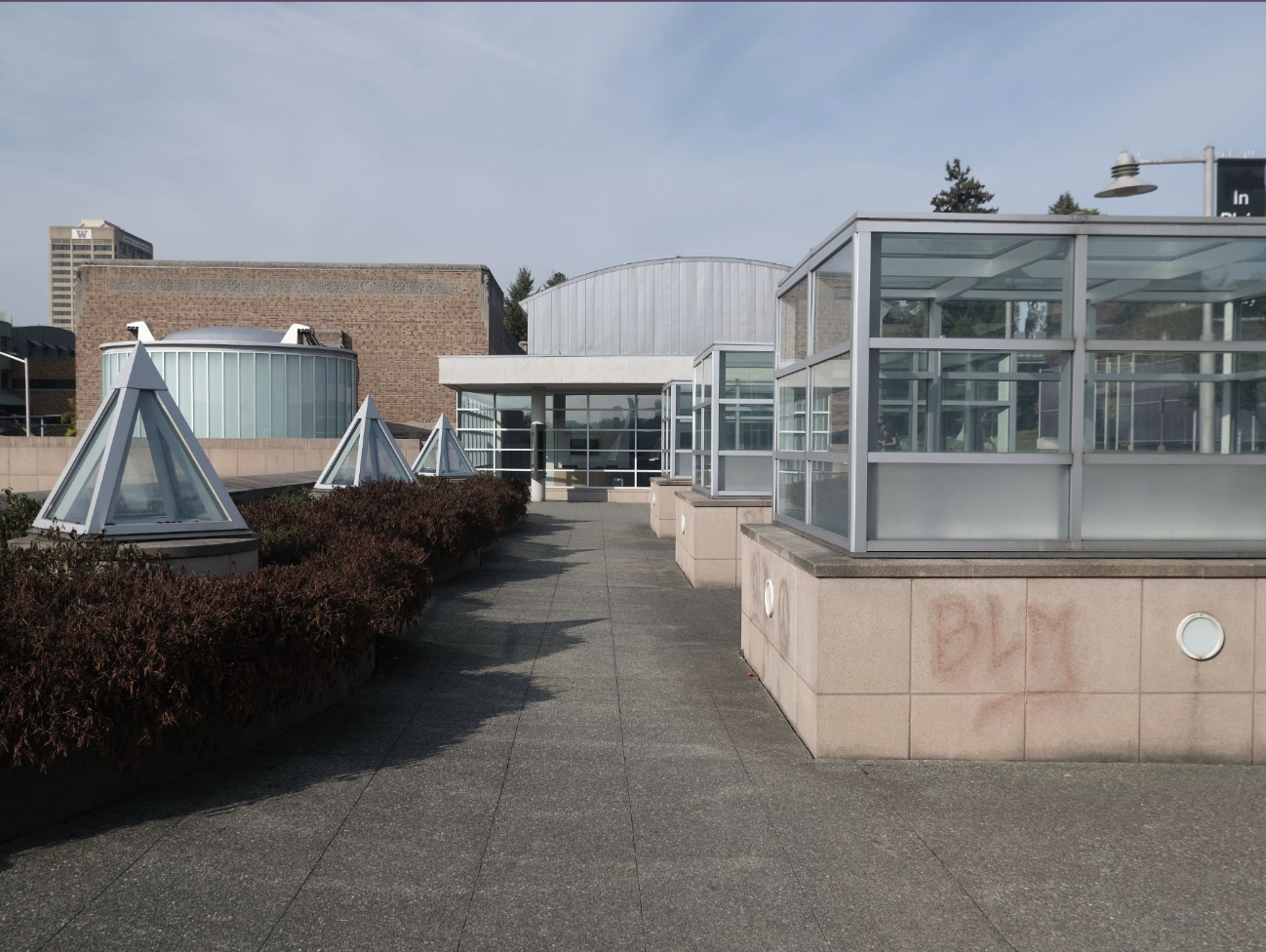
Photo: UW SmugMug. Exterior of the Henry Art Gallery on October 1, 2020, showing subtle tributes to diversity through faded Black Lives Matter graffiti.
Over the decades, however, the Henry Art Gallery has undergone a significant transformation. The museum now emphasizes contemporary art, with a particular focus on experimental works, emerging artists, and exhibitions that engage with themes of identity, politics, and social change.
In the 2024 fiscal year, the Henry Art Gallery's programming reflected a notable degree of diversity among its featured artists.
Of the nine single-artist exhibitions presented that year, six featured female artists, and eight highlighted artists of color.
Through a combination of rotating exhibitions and newly commissioned works, the Henry Art Gallery seeks to engage with ongoing conversations about representation and inclusion in the art world. The museum's recent programming has placed particular emphasis on elevating the voices of people of color, women, and members of the LGBTQ community.
Within a university campus that features art in many forms, the Henry Art Gallery stands out as an important institution.
The significance of the gallery lies not only in the works displayed but also in the perspectives represented.
Video Version
To go along with the written multimedia story, I produced a short video for social media formatting that dives into what art on campus leaves an impact on students and a little bit of the history of the Henry Art Gallery.